Guided Hypnotherapy for Drinking Less

Unconscious Moderation (UM) includes hypnotherapy for drinking less in its 90-day program. The guided sessions offer a chance to slow down and think about the moments when drinking feels automatic, and what might be behind them.

What to Expect From Hypnotherapy for Drinking Less

You don’t need any experience with hypnosis to use the sessions in UM. Find a comfortable place, follow the guidance, and give yourself some time to focus.

Settle In and Take Your Time

Each session guides you through a focused experience at your own pace. You can listen, get comfortable, and let everything else take a back seat for a little while.

Stay Aware and in Control

Hypnosis doesn’t mean being asleep or giving up control. You stay aware of what’s happening and can stop the session whenever you want.

Give Your Thoughts Some Room

The sessions let you pay closer attention to the thoughts, feelings, and habits around drinking that can be easy to move past during the day.

Add More Depth to Your 90 Days With Unconscious Moderation

Hypnotherapy adds another way to work with the habits you’re noticing throughout the program. You can use it alongside tracking, journaling, mindfulness, movement, and other UM tools.

Give Yourself a Break From Autopilot

Step out of your usual routine and set aside time to slow down and think about why you reach for a drink.

Notice What You Usually Brush Past

Thoughts and feelings about drinking can slip by in a busy day. A guided session makes room to sit with them.

Have Another Tool for Hard Moments

When a familiar situation brings up the urge to drink, a guided session offers a different way to respond.

Make Sense of Familiar Reactions

When the same reaction keeps appearing, a guided session can help you look at what’s behind it, so it feels less random.

How UM Uses Jungian Hypnotherapy

UM takes a Jungian approach to hypnotherapy for drinking less by looking at the personal images, feelings, and associations connected with alcohol. For one person, a drink might represent a reward after work. For someone else, it may be tied to comfort or feeling part of a group.

Guided sessions invite you to consider what those connections mean to you. What comes up in journaling or tracking can also give you a starting point for that reflection.

How Hypnotherapy Works in Your 90-Day UM Program

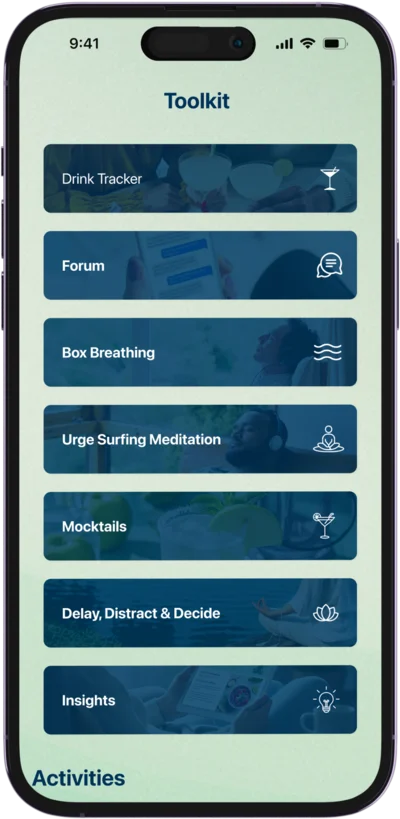
UM brings hypnotherapy together with journaling, drink tracking, mindfulness, and practical exercises. Each tool helps in a different way as you move through the program.

01

Reset

Start paying attention to your drinking habits through tracking and reflection. Guided sessions help you focus on the thoughts and feelings that come up.

02

Conscious Choice

As you become more familiar with your triggers, you can pair hypnotherapy with other UM exercises to look more closely at those patterns and consider different responses.

03

Integration

Keep using the practices that feel useful as you bring what you’ve learned into everyday situations and think about your relationship with alcohol going forward.

Ready to Try Something Different?

If you’ve been thinking about your drinking habits, UM offers a guided way to spend more time with those thoughts and see where they lead.

The Science Behind Drinking and Hypnotherapy

People respond to different approaches in different ways, so UM doesn’t rely on hypnotherapy alone. It’s one of several tools in the 90-day program, and you can lean on whichever ones work for you.

Research on hypnotherapy for drinking less is still developing. The National Center for Complementary and Integrative Health notes that evidence for hypnotherapy in substance-use treatment is limited.

A small 2026 randomized trial found improved well-being in two groups receiving different types of hypnosis, but neither approach outperformed the other on clinical alcohol outcomes. The study also couldn’t establish whether hypnosis itself caused the improvements.

Your Journey Starts With One Guided Session

If hypnotherapy for drinking less is something you’re curious about, you can try it in UM alongside the rest of the 90-day program. Take it at your own pace and see what feels useful to you.

Let’s go on a journey.
UM doesn’t replace medical or addiction care. If you’re worried about your drinking, your health, or stopping safely, talk to a qualified healthcare professional.

Hypnotherapy and UM FAQs

What does hypnotherapy feel like?

You stay awake and relaxed during a UM session, listening to the guidance and focusing on your own thoughts and feelings.

Will I lose control during hypnosis?

No. Hypnosis doesn’t mean someone else takes control of you. You remain aware of what’s happening and decide whether you want to continue.

Do I need experience with hypnotherapy?

No. The sessions are guided, so you can follow along even if hypnotherapy for drinking less is new to you.

Can hypnotherapy for drinking less help with cravings?

Research hasn’t shown that hypnotherapy reduces alcohol cravings. UM uses guided sessions as one way to spend focused time with urges, thoughts, and familiar drinking patterns as part of the wider program.

Is hypnotherapy the only tool UM uses?

No. UM also includes drink tracking, alcohol-free day tracking, journaling, mindfulness, movement, and practical exercises across the 90-day program.

Discover the science backed way hypnosis targets the root of cravings without fighting them head-on.

If you’ve ever felt a sudden, overwhelming urge to drink, even when you logically know you don’t want to, that’s your unconscious mind at work. Alcohol cravings aren’t just bad habits; they’re deeply wired patterns in the subconscious, often tied to stress, emotions, past experiences, or automatic responses that bypass rational thought.
 
Traditional approaches like sheer willpower or tracking apps can feel exhausting because they fight the surface level. But what if you could go deeper—directly to the root where those cravings form?
 
That’s where hypnotherapy comes in. By accessing the unconscious mind in a focused, relaxed state, hypnotherapy helps rewire how your brain responds to triggers, reducing cravings naturally over time. In this post, we’ll explore the science behind it, how it differs from willpower-based methods, and why a Jungian-informed approach (like the one in UM.app) makes it especially powerful for lasting change.

"With every breath, my mind releases the old habit of alcohol and embraces natural calm and clarity."

Understanding Alcohol Cravings: The Subconscious Driver

Cravings aren’t random. They stem from the brain’s reward system associating alcohol with relief, pleasure, or escape. Over time, repeated drinking strengthens neural pathways that make reaching for a drink feel automatic, almost like a reflex.
 
The subconscious mind stores these associations, along with emotional triggers (stress, boredom, social pressure). Conscious efforts alone often fail because they don’t address this deeper programming. That’s why many people experience short-term success followed by relapse: the underlying patterns remain unchanged.
 
Hypnotherapy changes this by working with the unconscious rather than against it.
Wellness tracking app
Are you enjoying what you're reading?
Download the app and begin your alcohol-free journey today.

What Is Hypnotherapy—and How Does It Access the Unconscious?

Hypnotherapy uses guided relaxation to create a trance-like state of focused attention and heightened suggestibility—similar to deep meditation but more directed. In this state, the critical, analytical part of the mind (the conscious filter) quiets down, allowing positive suggestions to reach the subconscious more effectively.
 

It’s not mind control or stage hypnosis. You’re fully aware and in control; the process simply bypasses resistance to introduce new ideas, such as:

  • Associating alcohol with neutral or negative feelings instead of reward
  • Strengthening natural coping mechanisms for stress
  • Building confidence in choosing non-alcoholic responses

Research supports this mechanism. Studies show hypnosis can alter brain activity in areas linked to habit formation and emotional regulation, making it easier to form new pathways through neuroplasticity, the brain’s ability to rewire itself.

Hypnotherapy for Alcohol Cravings: What the Science Actually Shows

While more large-scale research is needed, existing studies show promising results for hypnotherapy in addressing alcohol use:

  • A meta-analysis of multiple studies found hypnotherapy significantly reduced alcohol consumption and improved mental health outcomes.
  • Randomized trials comparing hypnotherapy to standard motivational interviewing showed participants experienced less desire to drink, reduced cravings, and longer periods of sobriety.
  • Clinical evidence indicates hypnosis helps by lowering withdrawal symptoms, managing stress (a major trigger), and reprogramming subconscious associations with alcohol.

One key advantage: it targets the root causes—like unresolved emotions or automatic responses—rather than just symptoms. When combined with other tools (journaling, movement), results compound because the subconscious changes get reinforced daily.

 
Experts note that highly suggestible individuals see stronger effects, but even moderate susceptibility yields benefits when sessions are consistent and personalized.

How UM.app Uses Jungian Hypnotherapy to Rewire Cravings

At UM.app, hypnotherapy isn’t generic—it’s rooted in Jungian psychoanalysis, developed by accredited Jungian analysts Dr. John O’Brien and Dr. Nada O’Brien.
 
Jungian principles emphasize exploring the unconscious to uncover deeper meanings behind behaviors. Drinking often serves as a way to numb inner conflicts, avoid shadow aspects of the self, or seek a false sense of connection. By gently bringing these to light, the program helps dissolve the emotional fuel behind cravings.
 

Key elements include:

  • Guided self-hypnosis sessions with Dr. John O’Brien: Weekly deep-relaxation audio places you in a receptive state to reshape habits, calm the nervous system, and build new responses to triggers. Suggestions focus on inner security and natural fulfillment—without relying on rules or deprivation.
  • Neuroplasticity in action: Repeated sessions strengthen healthier neural pathways. Over 90 days, cravings fade as the brain learns to associate calm and clarity with everyday life, not alcohol.
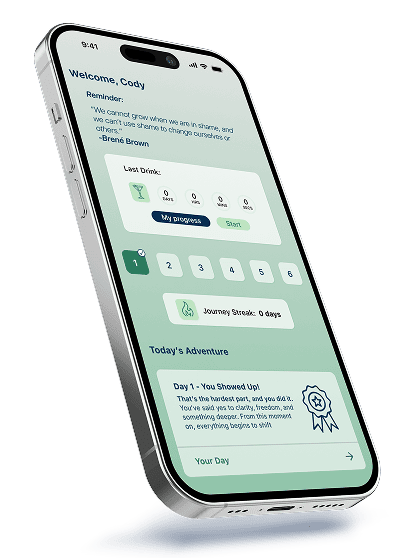
  • Integration with daily tools: Journaling uncovers emotional patterns (guided by Dr. Nada’s prompts and videos), short movements regulate the body and reduce stress hormones, and curated content reinforces mindset shifts. This multi-layered approach makes unconscious change stick.

Users often report urges feeling “distant” or irrelevant after consistent use—no white-knuckling required.

Why This Approach Beats Willpower Alone

Willpower depletes quickly (it’s a limited resource in the brain). Hypnotherapy builds automatic, effortless change by updating the subconscious “software” driving behavior.
 
Instead of fighting cravings, you gradually lose interest in them. Many describe it as the desire simply “falling away” as new patterns take hold.

Ready to Rewire Your Relationship with Alcohol?

If you’re tired of surface-level fixes and want to address cravings at their unconscious source, hypnotherapy offers a science-backed, gentle path forward.
UM.app‘s 90-day Unconscious Moderation program combines Jungian hypnotherapy, daily journaling, movement, and more to create lasting freedom from alcohol patterns—without labels or endless counting.
Start your journey today and experience how accessing the unconscious can transform cravings into calm clarity.
Wellness tracking app
Are you enjoying what you're reading?
Download the app and begin your journey today.

The Newsletter That Changes How You Think About Drinking

Science-backed, honest, and straight to the point