

Key Takeaways
Most people who drink too much during the holidays aren't out of control. They're just running on autopilot in high-trigger environments.
The nervous system doesn't distinguish between "I deserve this" and "I need this." Both feel exactly the same in the moment.
The first real proof that something has shifted isn't willpower. It's a moment where you expected to miss alcohol and didn't.
Physical changes, better sleep, more energy, visible body changes, arrive faster than most people expect.
Conscious drinking with a tool like a drink tracker isn't a crutch. It's what deliberate choice actually looks like in practice.
The day after drinking doesn't have to be a write-off. It depends entirely on how you drank.
01. How December Set the Whole Thing in Motion
December was a lot. Not just the occasional glass of wine at dinner. The kind of month where almost every weekend has a reason to drink, and the reasons are actually good ones: family gatherings, end-of-year parties with colleagues, friends you haven’t seen since last summer, celebrating things that actually deserve celebrating.
I genuinely love those nights. I love the food, the music, the feeling of being around people who matter. And alcohol has always been part of that picture for me. Not in a way that ever felt alarming. More like a default setting. Drinks are just there. You drink them. That’s how it goes.
But by the time January rolled around, I noticed something. I wasn’t hungover in the dramatic sense. I was just dull. Heavier. Not sleeping well. My gut felt slow. My motivation was somewhere at the bottom of whatever I drank on New Year’s Eve.
I also had a wedding coming up. A beach wedding. March 1st. And I wanted to look and feel the way I knew I could. I had a clear picture in my head: lean, energized, genuinely present for one of the most significant days I’d witness in years.
So January became an experiment. Not a punishment. Not a statement. Just a clear-eyed decision from someone who knows their own patterns well enough to recognize when they’ve drifted a bit too far from the version of themselves they actually prefer.
02. I Was a Social Drinker (And That's Exactly Why It Was Hard to See)
Here’s what I want to be clear about: I was never the person you worry about. I drank on weekends. Usually two or three weekends a month, sometimes more in December. I didn’t drink alone, didn’t drink out of sadness, didn’t drink every night. By any conventional measure, I was fine.
And that’s precisely why this was interesting.
Because “fine” is not the same as intentional. Fine just means nobody’s flagging it. It doesn’t mean you’re making a conscious choice every time you reach for a drink. It doesn’t mean alcohol isn’t quietly shaping how your Saturday nights feel, how you sleep, how your body recovers, how much mental bandwidth you have on Sunday.
If you’ve ever told yourself “I don’t really have a problem, so I probably don’t need to examine this,” that sentence is worth sitting with. The absence of a crisis is not the same as the presence of choice.
I wasn’t running from alcohol. I was just curious what would happen if I stopped letting it run on autopilot for a while. Those are different things. And that distinction is what made this feel completely different from the willpower battles I’d watched other people go through.


03. What the First Two Weeks Actually Feel Like
Alright. Let’s be honest about this part, because this is where people usually get blindsided.
The first couple of weeks are not a serene wellness montage. You’re not glowing immediately. Social situations feel slightly off because your brain is suddenly aware of the thing it normally doesn’t have to think about. You’re at a bar, everyone else is drinking, you order sparkling water, and for one fraction of a second you feel like you’re wearing a costume.
That feeling is not a sign that something is wrong. It’s a sign that a pattern you’ve run for years is being interrupted. Your nervous system is used to a certain sequence: social setting, drinks appear, drink the drink, feel a certain way. When you remove one piece of that sequence, the whole system goes slightly “huh?”
Here’s the thing your unconscious mind is doing in those moments: it’s scanning the room, seeing everyone with a drink in hand, and sending a very clear signal. Everyone around you is drinking. You should be drinking. It’s not weakness. It’s pattern recognition. Your brain is just doing what brains do.
So I found a workaround that sounds almost too simple: I always had something in my hand.
Sparkling water with lemon. Every time, without exception. And I made a point of being the first one to order. My friends would walk up to the bar and I’d already have mine. They’d order their beers, I’d be there sipping mine, and that was it. No production. No pause. No moment where someone could look at me and ask what I was having, because I already had it.
The lemon matters, by the way. It’s not about the taste. It’s about the ritual. Something cold, something with a little bite, something you can actually sip rather than just nurse out of obligation. The sparkling water gives your hands something to do. Your nervous system stops scanning for the thing it’s not getting because it’s already getting something.
It sounds trivial. It worked better than almost anything else I tried.
The peer pressure is also real, and I want to name it specifically. Among my friends, I’m normally one of the ones who drinks heavily on a night out. So when I started ordering sparkling water, the reactions were immediate. “Why are you doing that? Are you okay? That’s stupid. You’re not going to have a good time.”
I didn’t argue. I didn’t explain at length. I just had my drink and kept being myself: talking, laughing, commenting on everything happening, singing when the moment called for it. The same person I’ve always been, just without the alcohol.
The thing about peer pressure is it usually lasts exactly as long as it takes for your friends to realize you’re still fun. After a few outings, they stopped asking. They accepted it. And what I noticed was that my actual personality, the one that was apparently there all along, was more than enough to carry a night. When you stop using alcohol as a social lubricant, you start to discover that you didn’t need as much lubrication as you thought.
This is the part most people don’t push through. Not because it’s hard in the way running a marathon is hard. But because it’s uncomfortable in a way that’s difficult to explain to someone who isn’t in it. Neutral feels strange. Not having a social crutch, even a mild one, makes you suddenly aware of how much it was doing.
And here’s what’s important to understand about this phase: the discomfort is not evidence that you need alcohol. It’s evidence that your brain learned to use it. Those are different things.
Give it two weeks. The awkwardness dissolves. The sparkling water stops feeling like a consolation prize.
04. The Concert That Changed My Brain's Argument
About three weeks in, I went to a concert with friends. And I want to describe what happened in my head when I walked in, because it’s a very specific kind of experience.
The music was loud. People had drinks. The energy was exactly the kind that, in my brain’s filing system, is stored next to “this is when you have a beer“. It was one of those automatic associations reinforced probably hundreds of times: live music plus crowd plus good mood equals drink in hand. My brain looked at the situation and ran its usual calculation.
I noticed the pull. I didn’t fight it dramatically. I just noticed it. Got a sparkling water with lemon. Found my spot.
And then something happened that I genuinely didn’t expect. About twenty minutes in, I forgot about all of it. I was just at the concert. Dancing, laughing, having an actually great time. Not a slightly muted, sober-adjacent good time. A genuinely excellent time. And at some point I thought, “oh. I don’t actually need this.”
Not as a triumphant declaration. More as a quiet, slightly surprised observation.
That moment mattered more than I can explain in a sentence. It’s one thing to be told you can enjoy life without alcohol. It’s another to have your own nervous system hand you the data. My brain filed it differently after that. The association lost some of its grip.
05. When Your Body Starts Talking Louder Than the Habit
Somewhere around week three, I started noticing things I hadn’t been paying attention to.
Sleep was the first. Not just falling asleep faster, though that happened. I mean actually waking up feeling rested. That’s different. Most adults have forgotten what that’s supposed to feel like. We’ve normalized waking up at 70% and calling it fine.
Then the energy. Mornings started to feel different. Not in a bouncing-off-walls way, just a consistent sense of readiness that wasn’t there before. I was working out regularly, which I’d been doing before January, but suddenly the workouts were actually productive. My body was recovering. Progress was visible.
Then came the thing I had quietly filed under “probably not going to happen.” My abdominals started coming back.
I’m in my late thirties. I had convinced myself that certain physical states were just for a younger version of me. That’s what we tell ourselves. “I’m past that phase.” “That was my twenties.” What I didn’t fully account for is how much inflammation, poor sleep, and empty calories quietly tax the body over time. When you remove them together, which is what I did by cutting alcohol and sugar at the same time, the change is faster and more visible than you’d expect.
My body in late February looked like my body from twelve years ago. That’s not an exaggeration. I just removed the noise.
06. The Part Nobody Talks About: The Money, the Sleep, the Abs
Everyone focuses on the alcohol when they talk about taking a break from it. What they don’t talk about is what fills in when alcohol steps back.
Time, for one. I started reading again. Properly, not just scrolling through articles. I was working out consistently with my partner, which turned out to be its own kind of relationship investment I hadn’t anticipated. Mornings had space in them.
Money was the other thing. Drinks add up in a way that’s easy to ignore when you’re in the middle of it. Rounds at a bar, wine at dinner, the casual bottle you pick up Friday evening. None of it feels significant in the moment. Over two months, you start to notice the difference. I started directing that money into savings, into things I actually wanted.
Sleep quality changed my productivity in a way that was almost embarrassing. I was sharper at work. Less reactive. More patient. Not because I became a different person, but because I was no longer operating on a slight deficit that I’d gotten so used to I stopped noticing it.
Here’s the thing about these side effects: they’re not benefits of “not drinking.” They’re what happens when your nervous system gets enough rest to actually function at baseline. You’re not becoming a better version of yourself. You’re just finally running at the version you always were.
07. Why I Kept Going Past Dry January
I want to be direct about this, because I’ve heard people frame these kinds of experiences as a spiritual awakening, and that’s not what happened.
I kept going past Dry January because I liked how I felt. That’s it.
There was no dramatic moment of commitment. No declaration. I just woke up on February 1st and thought: the wedding is March 1st, I’m seeing my abs again, I’m sleeping well, I feel good. Why would I stop now?
That’s the version of this that nobody ever talks about. It doesn’t have to be a battle of willpower versus desire. It can just be a straightforward cost-benefit analysis run by someone who is paying attention. The math started coming out differently.
January turned into the first week of February. Then the second. Then it was just a given. The motivation wasn’t external pressure or a rule I was following. It was the lived experience of what happens when you clear the fog.
08. The Wedding: The Real Test
March 1st. Beach wedding. Best friend.
I want to tell you about this day because it’s the most honest account I can give of what conscious drinking actually looks like in practice, as opposed to what it sounds like in theory.
I had decided I was going to drink at the wedding. Not because I felt like I had to, not because I was caving, but because I genuinely wanted to raise a glass with people I love on a day that mattered. That’s a real reason. It’s a choice, not a reaction.
What was different was how I did it.
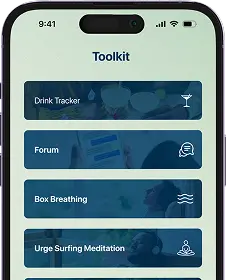
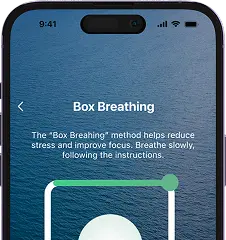
I opened the Unconscious Moderation app’s drink tracker. Every time I had a drink, I logged it. Every glass of water too. It sounds clinical when you describe it like that, and I expected it to feel that way in the moment, but it didn’t. It just kept me present. Instead of drinking on autopilot, I was making a series of small, conscious decisions throughout the night.
Around the fourth hour, I noticed I was starting to feel a slight shift. So I stopped, drank two glasses of water, spent half an hour just talking to people without a drink in hand. The feeling passed. I had one more drink later in the evening, on purpose, with full awareness. Then I was done.
I danced. I laughed. I was present for every part of the night. Not “present for a person who was drinking,” but actually there, in it, choosing what I wanted.
The morning after was the part that genuinely surprised me. Not fine in the “I’m pushing through it” sense. Actually fine. I ate a good breakfast, had a normal day, started the week without the usual fog. Two months of treating my body well had changed what a night of drinking actually did to it.
That’s what the previous version of January would have called impossible.
09. What I Use Now (And Why It Doesn't Feel Like a Rule)
I’m not operating on a rule system. There’s no calendar, no countdown, no streak to protect.
What I have instead is a much clearer sense of what alcohol costs me and what it gives me, and a strong preference for the nights when I’m actually making that decision rather than just going along with the default.
And when I do drink, I think about what I’m actually drinking. This might sound obsessive, but it’s the opposite. It takes about ten seconds and it changes the entire morning after. I don’t want sugary cocktails loaded with different spirits, because I know what those do to my head. I don’t want beer right now, because I know what those calories do to a body I’ve worked hard to get back. If I want a drink, I’ll have a vodka with sparkling water. Something clean, something that keeps me hydrated, something that lets me have a buzz without building a hangover. I’m not lecturing anyone else about what they’re drinking. I genuinely don’t care what other people order. I just know what works for me, and I order that.
The goal isn’t to be the person at the party evangelizing about alcohol. That person is insufferable, and I refuse to become them. My friends drink what they drink, I drink what I drink, and we all have a good time together. The only thing that changed is that I’m choosing consciously now instead of just going along with whatever’s available.
The Unconscious Moderation app became useful in a specific way. The reading material during January gave me a framework for understanding what was actually happening in my nervous system, which made the process feel less arbitrary and more like something I could make sense of. The drink tracker at the wedding gave me a practical tool that turned a potentially mindless night into something I was genuinely in charge of.
The hypnotherapy sessions were the part I was most skeptical about, and the part that surprised me most. Not magic, not a personality transplant. More like a pause. A moment where the nervous system slows down enough to actually examine what it’s been running on. I noticed a real difference in how I related to craving on the nights I used them versus the nights I didn’t.
FAQs
Did you find it hard to tell people you weren't drinking?
The first few times, yes. There’s a brief social awkwardness when you decline a drink, and with certain friends, there’s real pushback. People who know you as someone who drinks heavily don’t always understand the shift, and some of them will say so directly. What I found is that you don’t need to explain yourself. You just need to keep being yourself. Once they see that you’re still the same person, still fun, still present, the questions stop.
What's the sparkling water with lemon thing about?
Your unconscious mind is wired to mirror the people around you. When everyone at the table has a drink, your brain notices the gap and fills in the instruction: get a drink. The simplest way to short-circuit that is to already have something. Sparkling water with lemon isn’t a trick to fool yourself. It’s just giving your nervous system something to do so it stops scanning for what’s missing. Being the first to order also helps. You set your own pattern before the group dynamic can set it for you.
Did you miss alcohol?
Less than I expected. The concert was the hardest moment, and even that resolved itself within twenty minutes. What I missed wasn’t alcohol specifically. It was the feeling of ease I associated with it. When I found other ways to create that ease, the craving mostly lost its point.
How did the drink tracker change your experience at the wedding?
It created a small pause between the impulse and the action. That pause is where the choice lives. Without it, I’d have just been doing what I always did. With it, I was making a decision each time. The difference in how I felt the next morning made it completely worth it.
If you do drink now, what do you actually drink?
Something clean. Vodka with sparkling water if I want a buzz. Nothing loaded with sugar or multiple spirits mixed together, because I know exactly what that does the next day. It’s not restriction. It’s just knowing what I actually want the next morning and working backwards from there.
What's the one thing you'd tell someone considering this?
Don’t do it as a punishment. Do it as an experiment, with actual curiosity about what you find. The results will do the convincing for you.
Take the free quiz and find your starting point.