Finding a quit drinking app review that actually tells you the truth is harder than it sounds. Most apps are built on streaks and willpower and most people who try them end up feeling worse when the streak breaks, not better. This is a different kind of review.
Key Takeaways
Streak-based quit drinking apps work until they don't, and then you feel worse than before you started
The tools that actually help are the ones that interrupt the autopilot, not the ones that reward you for white-knuckling
Understanding why you drink matters more than counting how long you haven't
Changing your relationship with alcohol is a nervous system project, not a willpower contest
Sleep, anxiety, and mood often get worse before they stabilize, which is why most people quit trying during the first few weeks



Why You Want to Stop Drinking But the Streaks Keep Breaking
Let’s name the obvious thing: if willpower worked, you wouldn’t be reading this.
You’ve already proven you can stop. You’ve done dry months. You’ve white-knuckled through weddings. You’ve woken up on a Monday morning and sworn this week would be different. And sometimes it was. For a while.
But then the streak breaks. And when it does, the story you tell yourself gets uglier. You start to wonder if something is fundamentally wrong with you. If you’re weak. If you’re broken. If maybe those apps were right and you just didn’t try hard enough.
Here’s what’s actually happening:
Your brain learned, over years of repetition, that alcohol is a reliable solution to certain problems. Stress, boredom, social friction, overstimulation, understimulation, the weird low-grade dread of Sunday evenings. Alcohol worked. It down-regulated your nervous system. It dulled the noise. It gave you a temporary exit from whatever was too much.
That learning didn’t happen because you have poor character. It happened because your brain is designed to remember what works. And for a long time, alcohol worked.
Now you’re trying to unlearn that. But you can’t unlearn a habit by counting how many days you’ve avoided it. That’s not how neural pathways get rewritten. That’s just how you build pressure until the system breaks.
The streaks keep breaking because the streak isn’t addressing the actual problem. The actual problem is that your nervous system still believes alcohol is the fastest path to relief. And until you give it something else, something that actually works, it will keep defaulting to the old solution.
What Actually Changes Your Drinking Habits (Hint: It's Not Willpower)
Here’s where most advice fails you.
People tell you to “find healthier coping mechanisms” as if that’s a simple swap. As if you can just replace wine with herbal tea and suddenly your Friday night anxiety will dissolve.
The reason that doesn’t work is that alcohol isn’t just a behavior. It’s a nervous system intervention. When you drink, you’re not just consuming a substance. You’re triggering a specific physiological response. Your heart rate slows. Your muscles relax. The mental chatter gets quieter. The low-level hum of “too much” finally fades.
No amount of chamomile is going to replicate that.
So what does?
Anything that creates a similar nervous system shift, but without the rebound effect.
This is why breathwork, movement, and hypnotherapy show up in actual behavior change research. Not because they’re trendy, but because they access the same system alcohol does: the parasympathetic nervous system. These approaches are grounded in science and supported by evidence-based research, which demonstrates their effectiveness in helping to regulate the nervous system and support behavior change.
When you do a few minutes of slow breathing, you activate the vagus nerve, which tells your body the threat is over. When you move your body, even briefly, you discharge stress hormones that have been sitting in your system all day. When you enter a deeply relaxed state through hypnotherapy, you get access to the subconscious patterns running your behavior, the ones you can’t logic your way out of.
How Your Mental Health Gets Hijacked by Alcohol Use
In the short term, alcohol increases GABA activity, which is the brain’s main inhibitory neurotransmitter. That’s what creates the calming effect. The mental slowdown. The “I don’t care about my inbox right now” feeling.
But your brain doesn’t like being pushed around. So it compensates. It reduces its own GABA production and increases glutamate, which is excitatory. This is why you wake up at 3am with your heart racing after a night of drinking. Your brain is overcorrecting.
Over time, with regular alcohol use, your baseline shifts. Your brain becomes less capable of producing calm on its own. You need the alcohol just to feel normal. And without it, you feel more anxious, more irritable, more on edge than you did before you ever started drinking regularly.
When you stop drinking, or significantly cut back, this process reverses. But it doesn’t reverse immediately. For the first few weeks, your mental health might actually feel worse. You might sleep terribly. You might feel raw and irritable. You might wonder if this whole thing is a mistake.
It’s not. It’s your brain recalibrating. But if nobody tells you this is coming, you’ll assume the problem is you. You’ll assume you need the alcohol. And you’ll go back.
This is exactly why the best quit drinking app isn’t one that just tracks days. It’s one that explains what’s happening in your brain and gives you tools to survive the recalibration period.
Quit Drinking App Review: Why the Best One Isn't a Counter
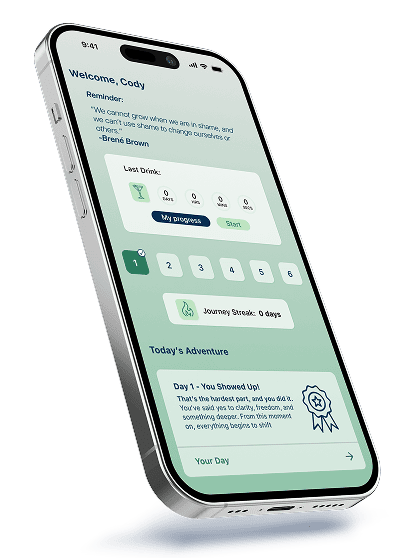
The Unconscious Moderation app is built on a simple premise: your drinking habits make sense. They developed for a reason. And until you understand that reason, no amount of counting or badge-collecting is going to create lasting change.
The UM app is designed to be accessible, with user-friendly features and an inclusive approach that makes support and tools available to a wide range of users, regardless of their tech experience.
The app includes daily journaling prompts written by a clinical psychologist. Not generic “how do you feel today” questions, but specific prompts designed to help the user see patterns they’ve been blind to. Why did Tuesday feel harder than Monday? What happened right before the urge hit? What were you actually trying to escape? These prompts are crafted to enhance the user experience by encouraging meaningful self-discovery.
This isn’t journaling for the sake of self-reflection. This is pattern recognition. And once the user sees the pattern, they can interrupt it before it completes.
The app also includes hypnotherapy sessions designed to work on the subconscious level. Not stage hypnosis. Not mind control. Just deep relaxation combined with targeted suggestions that help your brain build new associations. The kind of associations that make the old autopilot response less automatic. Users interact with these sessions to support their behavior change journey.
Here’s what the toolkit actually includes:
Tool
What It Does
When to Use It
Tool
Drink Tracker
What It Does
Helps you notice patterns without judgment
When to Use It
Any time you drink or feel the urge
Tool
Journaling Prompts
What It Does
Uncovers the “why” behind your drinking
When to Use It
Daily, ideally morning or evening
Tool
Box Breathing
What It Does
Activates parasympathetic nervous system
When to Use It
When you feel an urge or need to calm down
Tool
Urge Surfing Meditation
What It Does
Teaches you to ride out cravings without acting
When to Use It
When the craving hits and you need to wait it out
Tool
Forum
What It Does
Community support from others on the same path
When to Use It
When you need to feel less alone
Tool
Recipes
What It Does
Alcohol-free alternatives that actually taste good
When to Use It
Social situations or evening routines
The app also offers education through evidence-based courses, skills libraries, and resources to help users understand addiction, manage cravings, and develop healthier habits. These educational features are key to supporting lasting behavior change.
The point isn’t to give you more things to do. The point is to give you options that actually work when the old pattern tries to run.
The app encourages users to engage with the community, share progress, and build healthier habits through motivational features and peer support. This community engagement helps provide accountability and reduces feelings of isolation during recovery.
What Mindful Drinking Actually Looks Like in Practice
Real mindful drinking means noticing what’s happening before, during, and after you drink. Not to judge yourself. Not to assign moral value to your choices. Just to see clearly.
Before
What’s driving this?
Is it a genuine desire for a drink, or is it a pattern running on autopilot?
Are you bored, stressed, anxious, or just on schedule because it’s 6pm and that’s what you do?
During
How does the first sip actually feel?
The second?
The third?
At what point does the relief show up?
At what point does it stop adding anything?
After
How do you feel an hour later?
The next morning?
What did you gain from the drink?
What did you lose?
Most people have never actually asked themselves these questions. They’ve just done the behavior and moved on. Mindful drinking is the radical act of paying attention.
Apps like Sunnyside help users set personal goals for the week, including adding dry days when they do not consume alcohol. This makes mindful drinking more actionable and helps you track your progress.
The Unconscious Moderation approach doesn’t require you to quit entirely. It doesn’t require you to count days or earn badges. It asks you to start noticing. Because once you actually see what’s happening, the automatic quality of the behavior starts to dissolve.
You might still choose to drink. But it becomes a choice instead of a reflex. And that’s a fundamentally different experience.
Why You Can Drink Less Without Going Fully Alcohol Free
Here’s where the traditional quit drinking app model really breaks down.
Most of these apps are built on an all-or-nothing framework. You’re either on the wagon or you’ve fallen off. The streak is either growing or it’s reset to zero. There’s no middle ground.
But for most people, the goal isn’t lifelong abstinence. The goal is control. The goal is being able to have one drink at a dinner party without it turning into five. The goal is not waking up on Sunday morning with regret and a headache. The goal is freedom, not restriction. For some, the goal is to maintain a sober lifestyle, while others simply want to reduce their drinking.
The idea that you can drink less without going fully alcohol free is heresy in some circles. But it’s also supported by research. Moderation-based approaches work for a significant portion of people who want to change their relationship with alcohol. Especially people who don’t meet clinical criteria for severe alcohol use disorder. Apps like Reframe and Sunnyside focus on helping users reduce their drinking rather than requiring complete abstinence. In fact, Sunnyside users cut back on their drinking by an average of 30% in their first 30 days, showing the effectiveness of moderation-focused quit drinking apps.
The key is building the skills that make moderation possible. And those skills don’t come from willpower. They come from nervous system regulation, pattern awareness, and having alternatives that actually work.
The Role of Community Support When You're Figuring This Out
One of the loneliest parts of changing your drinking habits is that most people around you aren’t doing it.
Your friends still drink. Your coworkers still suggest happy hour. Your family still has wine at every dinner. And you’re sitting there, trying to do something different, feeling like the weird one.
This is where community support matters.
Not in a group therapy, holding-hands-and-sharing kind of way. Just in a “there are other people who get this” kind of way.
The Unconscious Moderation app includes a forum where people share what’s working, what’s hard, and what they’re learning. Users can comment on posts, respond to others, and engage in real conversations, not just performative success stories, but real stuff. The kind of stuff you don’t post on Instagram.
Community support in sobriety apps may include peer-to-peer forums, chat rooms, and access to coaches for accountability. Many sobriety apps include community features that allow users to connect with others, and community engagement can provide motivation and accountability. Apps that promote community support can help reduce feelings of isolation during recovery.
There’s something that shifts when you realize you’re not the only one struggling with the middle part. When you see someone else say “I almost caved last night but I did the breathing thing and it helped.” When you read that someone else also feels weird at parties now and is trying to figure out how to have fun without the social lubricant.
Why the Middle Part Feels Terrible (And Why That's Normal)
Let’s be honest about something: the first few weeks of cutting back or stopping alcohol are often worse than the drinking was.
Your sleep gets weird. You might have vivid dreams or wake up multiple times a night. Your anxiety might spike instead of decrease. You might feel emotionally raw, like someone removed a layer of insulation between you and the world.
This is not a sign that you’re failing. This is your nervous system adjusting to life without its go-to regulation tool.
When you’ve been using alcohol to manage your internal state, your brain has outsourced that job. It’s like a muscle you haven’t used in years. When you suddenly ask it to work again, it’s weak and uncoordinated. It needs time to rebuild.
Here’s a rough timeline of what to expect:
Timeframe
What’s Happening
What It Feels Like
Timeframe
Days 1-3
What’s Happening
Alcohol leaving your system
What It Feels Like
Possibly anxious, restless, sleep disruption
Timeframe
Days 4-14
What’s Happening
Brain chemistry recalibrating
What It Feels Like
Mood swings, irritability, cravings at habitual times
Timeframe
Weeks 2-4
What’s Happening
GABA/glutamate rebalancing
What It Feels Like
Sleep slowly improving, emotions still raw
Timeframe
Weeks 4-8
What’s Happening
New baseline emerging
What It Feels Like
More stable mood, clearer thinking, cravings less intense
Timeframe
Months 2-3
What’s Happening
Nervous system settling
What It Feels Like
Benefits become noticeable (energy, sleep, mental clarity)
Most people quit during weeks 1-4. Not because they’re weak, but because nobody told them this part was coming. They assumed change should feel good immediately. When it didn’t, they assumed something was wrong.
Nothing is wrong. This is just how the middle part works.
The tools that help during this phase are the ones that regulate your nervous system without alcohol. Box breathing. Movement. Hypnotherapy. Urge surfing. These aren’t feel-good practices. They’re survival tools for the recalibration period.
Small Tools That Actually Help
The Before/After Note
Before you drink, write one sentence about what you’re hoping to get from it. After you drink, write one sentence about whether you got it.
This is not about judgment. It’s about data. Most people discover that the drink delivers way less than it promises. Seeing that pattern in your own handwriting changes something.
The Morning Check-In
Spend 60 seconds each morning asking yourself: How do I feel physically? How do I feel emotionally? What’s my energy like?
Track this over a few weeks and you’ll start seeing correlations between your drinking and your wellbeing that you’ve been blind to. Not because you’re stupid, but because you’ve never actually looked.
The Social Script
Most people drink more in social situations because they don’t have a plan. Decide before you go what you’re going to say when someone offers you a drink. “I’m taking a break,” “I’m doing Dry January,” or just “not tonight” all work fine. Having the script ready removes the decision-making pressure in the moment.
The 5-Minute Pause
When you feel the urge to drink, set a timer for five minutes. That’s it. You’re not saying no forever. You’re just delaying. During those five minutes, do one of the following:
Box breathing: inhale 4 counts, hold 4 counts, exhale 4 counts, hold 4 counts. Repeat four times.
Step outside and walk to the end of your block and back.
Open the Unconscious Moderation app and do the urge surfing meditation.
Craving and trigger management tools in quit drinking apps often include guided exercises like CBT or mindfulness, as well as relapse prevention strategies.
By the end of five minutes, the peak of the urge has usually passed. You might still drink. But you’ll do it consciously, not reactively.
FAQs
How is this different from other quit drinking apps?
Most quit drinking apps focus on tracking days and calculating savings. They treat the behavior as the problem and assume that measuring your avoidance is enough to change it. The Unconscious Moderation app focuses on understanding why you drink and building new nervous system responses. It’s less about counting and more about rewiring.
Do I have to quit completely?
No. The goal is choice, not abstinence. Some people end up drinking much less. Some people stop entirely. Some people moderate. The point is that you get to decide based on what actually works for your life, not based on someone else’s rules.
What if I’ve tried other apps and they didn’t work?
If you’ve tried streak-based apps and they didn’t stick, that’s not a failure on your part. Those apps are built on a model that doesn’t work for most people long-term. You’re not bad at quitting. You just need a different approach.
What if I don’t want to do hypnotherapy?
The hypnotherapy sessions are one tool in the app, not a requirement. You can use the journaling, the breathing exercises, the urge surfing, and the community features without ever touching the hypnotherapy. That said, a lot of people who were skeptical find it surprisingly helpful once they try it.
How long before I see results?
Sleep and morning clarity often improve within the first two weeks for people who cut back significantly. Mood stabilization takes longer, usually four to eight weeks. The timeline varies depending on how much you were drinking and how long you’ve been drinking. But most people notice something shifting within the first month. Quitting drinking can also lead to improved blood pressure, weight loss, more energy, and help your liver heal and function more effectively.
What if I slip up?
There’s no streak to reset here. A slip isn’t a failure. It’s information. What triggered it? What were you feeling before? What could you try differently next time? The goal is to learn, not to achieve a perfect record.
Can I use this app if I only want to cut back, not quit?
Yes. The app is designed for people who want to change their relationship with alcohol, whatever that looks like for them. Whether you want to drink less, take a break, or stop entirely, the tools work the same way.
Is this a replacement for professional help?
If you’re experiencing physical withdrawal symptoms when you stop drinking, or if your alcohol use is causing significant harm to your health or relationships, please work with a medical professional. There is a risk of severe alcohol withdrawal, which can be dangerous and requires medical supervision. This app is a support tool for people who want to change their habits, not a substitute for clinical treatment when that’s needed. Medication can also be an important medical intervention for alcohol use disorder—FDA-approved drugs such as naltrexone and acamprosate can help reduce cravings, manage withdrawal symptoms, and support abstinence. Talk to your healthcare provider about whether medication might be right for you.
Who is this app for?
The app is for anyone looking to change their relationship with alcohol, whether you want to quit, cut back, or simply understand your habits better. It can also support individuals dealing with sugar, dopamine, or broader substance use issues, offering tools and community support for behavior change.
You’ve probably tried the apps that count your days. You’ve watched the number climb and felt the quiet pride. And then you’ve watched it reset and felt the shame that’s worse than any hangover.
That cycle isn’t proof that something’s wrong with you. It’s proof that counting isn’t enough.
What actually changes your drinking habits is understanding them. Seeing the pattern. Knowing what need the alcohol was meeting. And building new responses that work just as fast, without the cost.
That’s what the Unconscious Moderation app is designed to do. Not track your willpower. Not gamify your suffering. Just help you see clearly and give your nervous system something better to do.
The best quit drinking app isn’t the one with the most features or the prettiest badges. It’s the one that treats you like an intelligent adult who deserves to understand their own brain.
You already know how to count days. Now it’s time to learn something more useful.