The hardest part about California sober isn’t deciding to do it, it’s keeping your rules clear when your brain starts negotiating with you three weeks in. “Just this once” turns into “well, maybe on weekends” turns into “I don’t really remember what my boundaries were.” This guide gives you a framework for setting boundaries that actually work, not because they’re strict, but because they’re specific, written down, and realistic enough that you can actually follow them.
The Three-Part Rule Framework (What, When, Where)
Vague boundaries don’t work. “I’ll be moderate” means nothing when you’re making in-the-moment decisions. Your brain needs specifics.
What
Define exactly what substances you’re using and not using
Be crystal clear about what’s in and what’s out. “No alcohol” is specific. “Cutting back” is not. If you’re using cannabis, specify: CBD only? THC occasionally? Edibles but not smoking? The more precise you are, the less room there is for your brain to reinterpret the rules when it wants to.
When
Establish the timing and frequency
Your brain will find loopholes if you don’t define when. “Only on weekends” sounds clear until Thursday feels like the weekend because you have Friday off. Be specific.
Where
Set location-based rules
Context matters. You might handle cannabis fine at home but not at parties. Location-based boundaries help you anticipate situations before they happen. Only at home, never in public. Not around family or at work events. Only when you’re staying in for the night.
Writing Down Your Non-Negotiables
Here’s the uncomfortable truth: if your boundaries only exist in your head, they’re negotiable. Your brain is excellent at rewriting rules when it wants something.
Why writing matters
When you write down your boundaries, you create accountability to your past self, the version of you who was thinking clearly and had good reasons for these rules. Written boundaries also let you track patterns. If you keep breaking the same rule, that’s information.
Your boundary template
What I’m eliminating:
Alcohol (all forms)
[List anything else you’re removing]
What I’m allowing:
CBD [specify how much, what form]
THC [specify when, how much, what situations]
My non-negotiable rules:
[First rule] - Why this matters: [your reason]
[Second rule] - Why this matters: [your reason]
[Second rule] - Why this matters: [your reason]
Warning signs that I’m slipping:
Using more frequently than my boundaries allow
Making excuses about why "this time is different"
Hiding my use from people I trust
Review date: [Pick a specific date to reassess]
What to Do When You Break a Rule
You will break a boundary at some point. The question isn’t if, it’s what you do next.
Don’t spiral
The biggest mistake: using it as evidence that the whole approach is doomed. “Well, I already messed up, might as well keep going.” One broken boundary doesn’t erase everything or mean you’ve failed.
Get curious, not critical
Instead of beating yourself up, investigate what happened. Were you stressed? Tired? In a situation you hadn’t planned for? The broken boundary is data about where you need more support or clearer rules.
Adjust or recommit
After you’ve investigated, you have two choices: adjust the boundary to be more realistic, or recommit to the original rule with better support in place. If you keep breaking the same boundary repeatedly, it might not be the right boundary. That’s not failure, that’s learning what works.
The 24-hour rule
Give yourself 24 hours after breaking a boundary before making any decisions about changing your approach. Make decisions from a calm, clear state, not from the middle of shame or justification.
How UM Helps
California sober requires constant conscious decision-making that complete abstinence doesn’t. That’s exhausting if you’re relying on willpower alone.
Our hypnotherapy sessions work with your unconscious mind to strengthen your actual boundaries, not just your conscious intentions. When your unconscious aligns with your rules, following them stops feeling like constant effort.
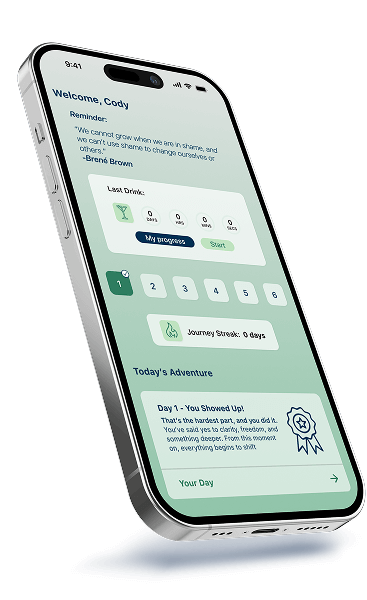
The guided journal prompts help you track patterns, notice warning signs, and stay connected to your reasons for these boundaries. The app gives you structured daily support, hypnotherapy sessions for specific challenges, movement practices to ground you when cravings hit, and science-based readings that explain what’s happening in your brain.
California sober works when your boundaries are clear, written down, and supported by tools that work at the unconscious level where habits actually live. That’s exactly what we built.
Liked what you read?
The Unconscious Moderation app is where real transformation begins. It brings these tools to life ,with hypnotherapy, journaling, mindful movement, and more; right at your fingertips to help you rewire from within.
Download the app and begin your journey today.
JOIN OUR NEWSLETTER
Subscribe to our newsletter to receive the latest news and exclusive offers every week. No spam.
Thousands Rewiring Their Relationship with Alcohol.
1 Newsletter That Changes the Way You Think.
Science-based, reflective, and to the point… just like UM.