

“The only person you are destined to become is the person you decide to be.”
– Ralph Waldo Emerson
You might have heard of dopamine as the ‘feel-good’ chemical, but it’s so much more. Understanding dopamine is like unlocking a secret door to your habits, especially your relationship with alcohol.
Welcome to dopamine overload. Your brain isn’t broken. It’s just exhausted from being overstimulated by a world designed to hijack your attention every 20 seconds.
Dopamine plays a huge part in what you love, crave, and how you seek rewards. It’s like your brain’s own reward system operator. But sometimes, it can get a bit carried away, especially with substances like alcohol.
Think of your brain as an incredibly sophisticated computer that’s constantly learning and adapting. Every experience you have, every choice you make, is teaching your brain what to expect next time. And dopamine? It’s the signal that tells your brain, “Yes, more of this please.” The question is, what have we been teaching it to want?
The Science of Dopamine
Dopamine is one of the most famous brain chemicals. Why? Because it’s your brain’s way of saying, “Hey, I like this, let’s do it again!”
Imagine you’re biting into your favorite food. That burst of happiness is dopamine in action. But here’s what makes dopamine truly fascinating: it’s not just released when something good happens. It’s released in anticipation of something good happening.
Your brain starts celebrating before the party even begins. This anticipation system is incredibly powerful. It’s what gets you excited about a vacation weeks before you leave, or makes your mouth water when you smell coffee brewing.
Dopamine isn’t just about joy. It’s about learning, memory, and motivation. It’s the brain’s internal GPS that says, “Remember this route, it led somewhere good.” Every time dopamine fires, it’s strengthening neural pathways, making certain behaviors more automatic.
So, how does this relate to alcohol?
When you drink, your brain gets a dopamine surge. But here’s the catch: alcohol doesn’t just give you a little dopamine bump, it floods your system with it. Your brain starts thinking, “Wow, this is amazing.” It begins to crave that dopamine high.
Alcohol artificially spikes your dopamine levels way beyond what natural rewards provide. Your brain starts to prioritize alcohol-seeking behavior because, from a purely chemical perspective, alcohol delivers massive rewards with minimal effort.
Different hits of dopamine, which one do you often choose?
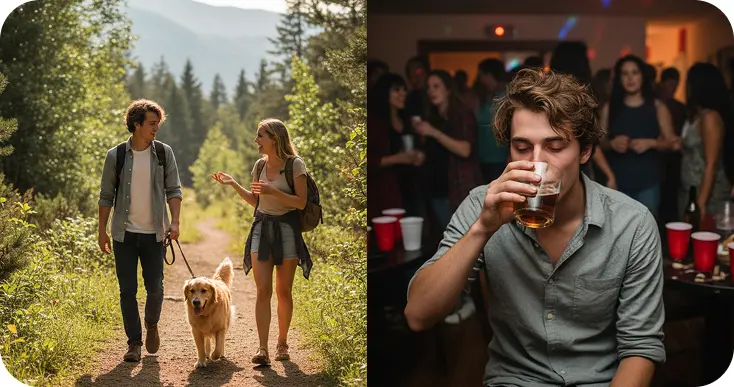
You’re about to teach your brain a new way to celebrate, with activities that bring joy without the hangover. And the beautiful thing? Your brain is incredibly plastic, meaning it’s capable of change at any age. The wires can absolutely be moved around.
The Link Between Dopamine and Your Patterns
Imagine dopamine as your brain’s ‘like’ button. When you drink, you’re basically smashing that button. Your brain records it as a pleasurable event.
But here’s where it gets tricky: the more you drink, the more your brain relies on alcohol to hit that dopamine high. Your brain starts to expect that level of stimulation, and natural rewards start to pale in comparison.
The brain loves to adapt. So when alcohol keeps pumping dopamine, your brain adjusts. This adjustment leads to tolerance. Your dopamine receptors downregulate, meaning you need more alcohol to feel the same effect.
This happens at the unconscious level. You’re not consciously deciding to need more, your brain has simply recalibrated its baseline. The answer lies in understanding this link. Recognizing that your cravings are part of a chemical reaction makes them less personal. It’s not a character flaw, it’s chemistry.
But you can find new, healthier ways to get that dopamine hit. Exercise, hobbies, and connecting with loved ones can become your new sources of joy. Yes, these activities might not provide the immediate spike that alcohol does, but they offer something better: sustainable, healthy dopamine without negative consequences.
Every time you choose a healthy habit over a drink, you’re rewiring your brain’s reward system. You’re creating new neural pathways, new associations. And with repetition, these new pathways become your new normal.





Dopamine's Role in Transformation
When you stop or moderate drinking, your brain’s like, “Wait, where’s the dopamine celebration?” This is where the real work begins. Your brain’s used to getting its dopamine fix from alcohol. Now, it needs to learn to produce it naturally again.
This transition period can be challenging. You might feel low, irritable, or intensely crave a drink, but it’s all part of the healing process. Your brain is adjusting and recalibrating its dopamine levels.
During this time, your brain is actually rebuilding its dopamine system. Those receptors that downregulated? They’re starting to upregulate again. But this doesn’t happen overnight. It can take weeks or even months for your brain chemistry to fully rebalance.
You can help your brain along this path, though.
Engage in activities that naturally boost dopamine. Exercise, for instance. Physical activity triggers dopamine release in a way that supports your brain health rather than compromising it. Whether it’s yoga, running, dancing, or just walking in nature, movement is medicine for your dopamine system.
Or try picking up a new hobby. Each small achievement is a step towards rewiring your brain’s reward system. Your brain gets little dopamine hits from progress, from mastery, from creating something.
The key here is patience and persistence. Your brain didn’t develop these patterns in a day. It won’t adjust overnight, either. But every conscious choice is a victory. Here’s something powerful to remember: your brain wants to be healthy. You’re not fighting against your brain, you’re giving it what it actually needs to thrive. You’re already whole, you’re just moving some wires around.
This isn’t about judgment. It’s about awareness. You’re becoming conscious of unconscious patterns.
Strategies to Balance Dopamine Naturally
Balancing your dopamine naturally is like tuning a guitar. It’s all about finding the right balance to make the music of life sound just right.
Exercise is Your First Go-To. Whether it's a brisk walk, a jog, or dancing to your favorite tunes, moving your body releases dopamine, endorphins, and serotonin. Start where you are. A ten-minute walk counts. The goal is consistent movement that you actually enjoy.
Food Matters. Foods rich in protein contain amino acids, which are building blocks for dopamine. Think lean meats, eggs, dairy, and legumes. Foods high in tyrosine, like chicken, fish, almonds, avocados, and bananas, are particularly helpful. Also consider omega-3 fatty acids through fish, walnuts, or flaxseeds.
Sleep. Good, restful sleep is like a reset button for your brain. It helps regulate your dopamine levels. When you're sleep-deprived, your dopamine system doesn't function properly, which can increase cravings. Aim for a regular sleep schedule.
Social Connections. Connecting with friends, joining a support group, or even petting a dog can give you a dopamine boost. Humans are social creatures, we're literally wired for connection, and meaningful interactions trigger dopamine in beautiful, sustainable ways.
Learn Something New. Engage in activities that challenge and interest you. Learning a new skill provides a sense of accomplishment, a natural dopamine kick. Your brain loves novelty and mastery. Maybe it's learning a language, taking up photography, gardening, writing, whatever sparks your curiosity.
Balancing dopamine naturally is a journey. It’s about making small, consistent changes. Each step you take is rewiring your brain towards a healthier, happier you.
Remember, you’re not depriving yourself of joy by changing your relationship with alcohol. You’re actually opening yourself up to deeper, more sustainable sources of joy. You’re teaching your brain a new way to celebrate life, one that honors who you truly are and who you’re becoming.